AI-Driven Legacy Service Migration: A Pragmatic Approach to Modernizing Ruby to Java


The digital landscape is littered with the „ghosts” of high-growth eras: legacy Ruby on Rails monoliths that once powered rapid scaling but now struggle under the weight of modern throughput, maintenance costs, and a shrinking pool of specialized talent. For many enterprises, the move to a Java-based Spring Boot ecosystem is the logical next step for stability and performance. However, traditional migration is often a multi-year slog fraught with risk.
Enter Large Language Models (LLMs). We are currently in a „Goldilocks” zone where AI can do more than just autocomplete snippets; it can act as a bridge between two vastly different programming paradigms. But there is a catch. Using AI effectively requires moving past the hype and adopting a surgical, step-by-step integration into the Software Development Life Cycle (SDLC).
This article outlines a pragmatic, spec-driven approach to migrating legacy Ruby services to Java using AI as an accelerator – not an autopilot.
Introduction to AI-Driven Legacy Software Modernization
Business Context and the General Value of AI
In the enterprise world, legacy software isn’t just „old code” – it is „profitable code” that has become a liability. A legacy Ruby service might be the backbone of a payment gateway or a user management system, but its technical debt now manifests as:
- High Latency: Ruby’s Global Interpreter Lock (GIL) and memory overhead can struggle with high-concurrency demands.
- Talent Scarcity: Finding senior Ruby developers who want to maintain decade-old code is increasingly difficult compared to the vast Java ecosystem.
- Integration Friction: Modern cloud-native tools and security frameworks often prioritize JVM-based environments.
AI changes the ROI of modernization. Traditionally, the „Analysis” phase alone could take months of manual code auditing. AI reduces this „discovery tax” by instantly summarizing logic, identifying dependencies, and translating business rules into readable formats. The value isn’t just in writing code faster, it’s in lowering the cognitive load required to understand what the legacy system actually does.
Across the industry, the shift from theory to practice in large-scale modernization is now a strategic investment decision rather than a purely technical exercise. While migrating to a new platform may seem straightforward in theory, there is often a clear difference between what is expected and what happens in real execution. A company must balance speed, risk, and security while ensuring systems remain secure and stable.
This shift from legacy infrastructure requires disciplined planning, validated assumptions, and the ability to develop reliable deployment strategies under real constraints. AI and machine learning are now widely used to optimize resources, support decision-making, and improve execution quality across teams, though without strong discipline they can still introduce operational chaos instead of controlled change.
Strategy: The Pragmatic AI Migration Loop
The strategy is simple: Spec-Driven Development. Instead of asking AI to write code, we ask AI to help us understand the intent of the old code, document that intent in Markdown, and then use that Markdown as the „source of truth” to generate the new system. This keeps humans in the driver’s seat while letting AI handle the heavy lifting of boilerplate and translation.
The „Magic Wand” Anti-Pattern
Before we dive into the process, we must address the most common mistake organizations make when they get their hands on a ChatGPT or Claude API key.
The Myth: „Rewrite it in Java”
The temptation is to take a legacy Ruby repository, zip it up, and prompt an LLM: „Here is my Ruby project. Rewrite it in Java and make it better.”
This is the „Magic Wand” Anti-Pattern. In reality, this results in several disastrous outcomes:
- Bug-for-Bug Copies: AI is a pattern matcher. If your Ruby code has a subtle logical flaw or a „hack” to work around a 2014-era library bug, the AI will dutifully translate that hack into Java.
- Context Blindness: The AI doesn’t know why a specific decision was made. It might replace a complex Ruby service_object with a generic Java class that misses the essential business edge cases hidden in the original code.
- Architectural Drift: A „blind” rewrite usually ignores modern Java best practices like Spring Boot’s dependency injection or reactive programming, resulting in „Java code that looks like Ruby code.”
Reality: AI is an Assistant, Not an Architect
Legacy software migration is a structured engineering process. To extract true value, we must break down the SDLC and apply AI surgically. We don’t want the AI to decide the architecture. We want the AI to implement the architecture we have chosen. We trade the „Magic Wand” for a „Scalpel.”
Analysis & Research: Legacy System Migration Strategy
The first step in any migration is figuring out what you actually have. In legacy Ruby apps, documentation is often a „nice-to-have” that never happened.
Analysis (AI-Assisted Reverse Engineering)
We use LLMs to perform Reverse Engineering. By feeding the AI snippets of Ruby models, controllers, and lib files, we can generate a technical baseline without spending weeks in the dark.
- Logic Extraction: AI can summarize what a complex ActiveRecord callback is doing in plain English.
- Dependency Mapping: It can identify which external APIs and gems are critical and which are obsolete.
Research (Human-Driven Strategy)
While AI establishes the technical baseline, humans must establish the business baseline.
- Pain Points: Only a human knows that „the reason we are migrating this is that the Ruby gem for OAuth 2.0 is no longer maintained and we have security vulnerabilities.”
- Political Nuance: AI doesn’t know that the Marketing team relies on a specific weirdly formatted CSV export that isn’t documented in the code but is vital for their weekly reports.
As-Is Architecture Example: Visualizing the Unknown
Visualizing „spaghetti code” is the best way to untangle it.
Mapping the Unknown
Inputting undocumented Ruby code into an LLM and asking for a visual representation is a game-changer. By requesting Mermaid.js or PlantUML markup, you can instantly see the relationship between data models and service layers.
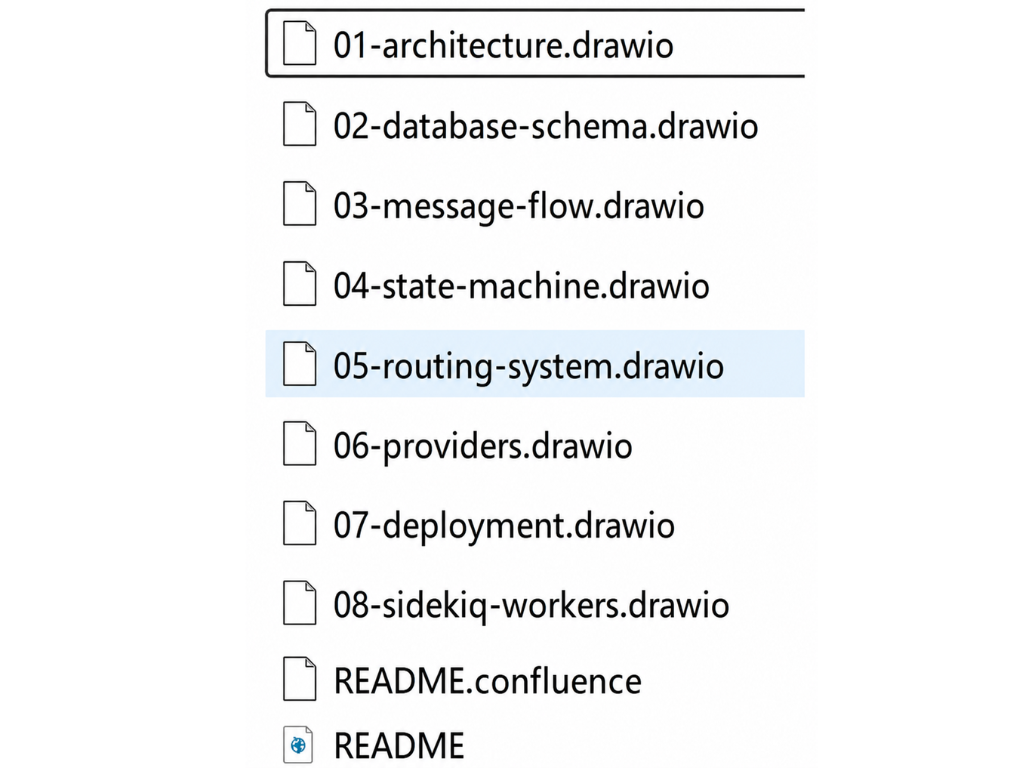
Visualizing via Mermaid
Consider a Ruby User model that has several associations and a complex state machine.
Example AI Prompt: „Analyze this Ruby User model and generate a Mermaid class diagram showing associations and main validation logic.”
The resulting diagram allows the team to see „hidden” complexities, like a user model that is unexpectedly coupled to a billing service, before a single line of Java is written.
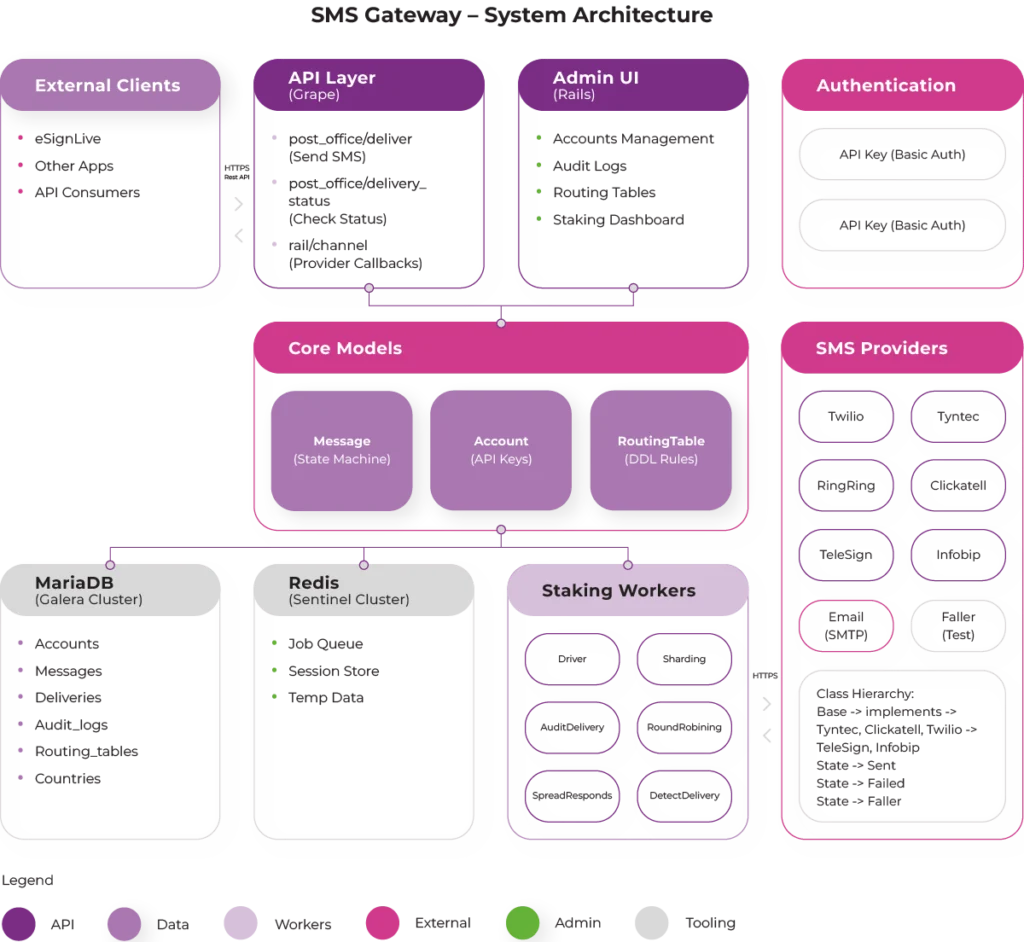
Design/Architecture Phase: Setting New Foundations
Once the „As-Is” is understood, we move to the „To-Be.” This is where we leverage Domain-Driven Design (DDD).
Setting the Spec
Instead of a direct translation, we use the requirements derived from the Research phase. The AI’s role here is to help visualize how these requirements fit into a Spring Boot ecosystem.
- Defining Aggregates: We use AI to suggest how Ruby’s often-bloated models should be split into clean DDD Aggregates in Java.
- Layered Architecture: The AI helps scaffold the Repository, Service, and Controller layers according to the latest Java standards.
- Docs-as-a-Code: The Markdown Bridge
This is the core of our pragmatic approach. We use Spec-Driven Development to ensure the AI has enough context to produce high-quality code.
The Markdown Bridge
We create a structured Markdown file that acts as the „Contract.” It contains:
- Functional Requirements: What the service does.
- Data Schema: The target Java entities.
- API Contracts: OpenAPI/Swagger definitions.
Generating Java Code
With this Markdown bridge in place, the prompt for the LLM becomes extremely specific:
„Based on the attached Markdown specification (Section 3: Payment Processing), generate a Spring Boot Service implementation using Java 21 and Spring Security. Ensure it follows the interface defined in Section 4.”
This eliminates hallucinations because the AI is constrained by the „Docs-as-Code” specification.
Test Automation: Business-Readable Scenarios
A common mistake in migration is ignoring tests until the end. We take a pragmatic approach: Behavior-Driven Development (BDD).
AI-Generated Gherkin
We use AI to generate .feature files (Cucumber/Gherkin) based on the legacy Ruby logic and the new Java spec.
- Ruby Input: A Ruby RSpec test file.
- AI Output: A Gherkin scenario:
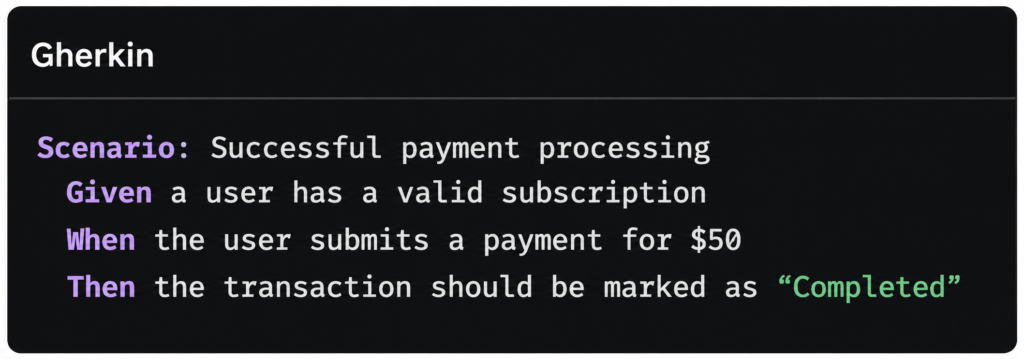
The Proof of Parity
By generating these tests after implementation but based on the spec, we create a business-readable proof that the new Java service matches the legacy Ruby behavior. This provides the confidence needed for a cut-over.
Deployment & Maintenance: Grounded in Proven Tools
AI is great for creation, but for „day two” operations, we rely on established engineering discipline.
Deployment (Standardized IaC)
We don’t reinvent the wheel. We use AI for routine, repetitive tasks:
- Generating Dockerfiles optimized for the JVM (e.g., using multi-stage builds).
- Scaffolding Helm charts for Kubernetes deployment. AI is excellent at these boilerplate tasks, freeing humans to focus on security configurations and networking.
Maintenance & Observability (Logz.io)
Once the service is live, we transition from „Migration” to „Observation.”
Using tools like Logz.io, we integrate intelligent log analysis. If the new Java service starts throwing exceptions that the Ruby service didn’t, the AI-driven anomaly detection in Logz.io catches it immediately. This provides a safety net during the „shadowing” phase of deployment.
Key Takeaways and Conclusions
Migration is not a „one-and-done” event, it is an evolution. By using AI as a surgical tool throughout the SDLC, we turn a high-risk Ruby-to-Java migration into a manageable, predictable project.
AI is an Accelerator, Not an Autopilot
The most successful migrations are those where humans remain the architects. Use LLMs to handle the „tedious 80%”: documentation, boilerplate, and initial translation. Keep the „critical 20%” (business logic and security) under human review.
Spec-Driven Development is the New Standard
Markdown is the ultimate bridge. By maintaining a „Docs-as-Code” approach, you ensure that your documentation is never out of sync with your implementation.
Pragmatism Over Hype
Don’t use AI where a shell script or a proven tool like Logz.io works better. Modernization is about results, not using the trendiest tool. If a tool works, use it; if AI makes it faster, leverage it.
The move from Ruby to Java is a move toward long-term sustainability. With a pragmatic AI strategy, that move can happen faster, safer, and with significantly less „ghost code” haunting your new architecture.
Ultimately, modernization should be evaluated by the value it delivers rather than by the amount of code that has been rewritten. A well-executed legacy migration preserves critical business knowledge while creating measurable business outcomes, including improved scalability, lower maintenance costs, and faster feature delivery. When AI is used to complement engineering expertise instead of replacing it, organizations are better positioned to maximize long-term business value and ensure that the modernized system continues to evolve with future business needs.
Summary Table: The AI-Driven SDLC for Legacy Migration
| SDLC Phase | AI Tool/Role | Human Role | Output |
| Analysis | Reverse engineering Ruby logic | Contextual validation | As-Is Architecture (Mermaid) |
| Design | Scaffolding DDD Aggregates | Architectural decisions | Markdown Specifications |
| Implementation | Code generation from Markdown | PR Review & Refactoring | Spring Boot Java Code |
| Testing | Gherkin/Cucumber generation | Scenario validation | Test Suite (Parity Proof) |
| Deployment | Docker/Helm scaffolding | Security & Env config | Production-ready Artifacts |
| Maintenance | Anomaly detection (Logz.io) | Incident Response | Stable, Observable System |