5 Ways to Reduce Energy Costs in Manufacturing


In short
- Monitor energy consumption to gain visibility and make data‑driven decisions instead of relying on aggregated invoices, helping organizations systematically reduce energy costs in manufacturing.
- Understand energy costs at the product and facility level to identify low‑margin products, cost drivers, and improvement opportunities that directly support efforts to reduce energy costs in manufacturing.
- Identify and eliminate energy waste by detecting leaks, inefficiencies, and abnormal energy usage early, which is essential when aiming to reduce energy costs in manufacturing.
- Optimize energy‑intensive systems such as compressed air to reduce losses and unnecessary consumption a key step in any strategy to reduce energy costs in manufacturing.
- Engage teams around a shared energy strategy so energy efficiency becomes part of daily operations, not a one‑off initiative, reinforcing a culture that continually works to reduce energy costs in manufacturing.
Introduction
According to Eurostat, the manufacturing industry was responsible for 26.1 % of total energy usage in 2020, yet due to relatively low prices and high availability of energy at the time, it was often overlooked in cost and innovation discussions. More recent trends reinforce the urgency of this issue: the International Energy Agency’s Global Energy Review 2025 shows global energy demand grew by about 2.2 % in 2024, driven in part by industry and electrification.
In the EU, industry still accounted for nearly a quarter of total final energy use in 2023, with electricity and natural gas as the dominant fuels. Energy prices remain volatile, putting pressure on manufacturers to control costs while also meeting rising expectations for sustainability and reporting. With environmental impact in mind, reducing energy use is now critical, not only to improve competitiveness but also to lower carbon emissions and support long-term sustainability.
Without an overall strategy for energy management, it is almost impossible to lead change in this area or drive unified initiatives. Only a dedicated energy team with buy-in from across the organization can develop such a strategy, conduct an energy audit, and define a plan that turns improvement opportunities into real, measurable results. Manufacturers looking for practical guidance on how to build such a strategy can explore our article on Energy Management Systems for UK manufacturers, which outlines key steps and best practices for structuring effective energy governance.
1. Monitor energy consumption across manufacturing operations
Why energy visibility is the foundation of cost reduction
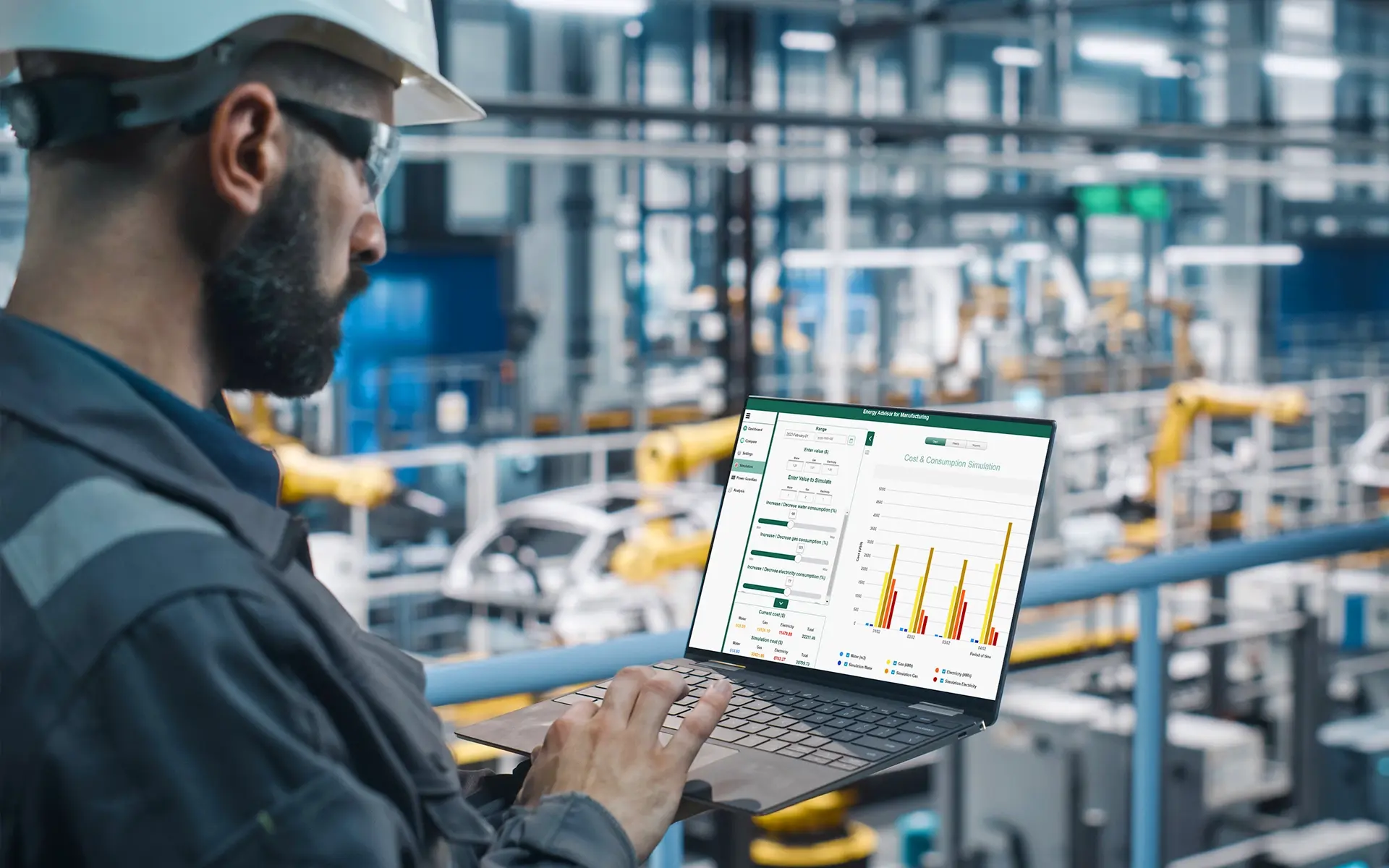
Manufacturers cannot control what they do not measure. When energy consumption is visible only at invoice level, cost drivers remain hidden and corrective actions come too late. A structured monitoring solution provides the data foundation needed to turn visibility into consistent, data-driven decisions.
Have a global, 360-degree view of your energy
Raw energy meter data alone does not explain why energy costs increase. Without context from production planning, processes, and facilities, energy data cannot be linked to real operational causes.
Integrating energy and operational data enables a holistic, 360-degree view that reveals where and why energy is consumed.
This comprehensive, contextualized approach enables manufacturers to identify the areas with the highest energy consumption, understand the drivers behind them, and prioritize actions based on facts rather than assumptions turning visibility into actionable, data-driven decisions.
Modern energy monitoring solutions combine multiple data sources smart meters,
production equipment, and building management systems to provide real-time visibility.
By tracking energy intensity benchmarking across facilities, manufacturers can identify
which sites operate most efficiently and replicate best practices. This comparative
approach reveals not just where energy is consumed, but how effectively it supports
production output. For companies exploring What is an Energy Management System for Manufacturing, this insight-driven approach forms the foundation for building a scalable and data‑driven energy strategy.
Practical takeaway: if you cannot see energy consumption per process or product, you cannot control costs.
2. Understand energy costs at product and facility level
Calculating energy costs per unit produced
Many manufacturers know their total energy bill but not the energy cost of individual products.
Without this insight, energy-intensive products silently erode margins and distort Profit & Loss results.
Assigning energy costs per unit produced makes energy a measurable component of product-level profitability.
Energy impact on product profitability and portfolio decisions
Product profitability is often assessed without fully accounting for energy intensity.
This leads to suboptimal portfolio, pricing, and production decisions that amplify hidden energy costs.
Product-level energy data allows manufacturers to optimize portfolio mix based on real cost structures.
Managing facility operating costs and utilities
Facility operating costs can quickly become a major driver of total energy spend.
Without a clear cost breakdown, inefficiencies in lighting, heating, and air conditioning remain unnoticed.
Data-driven monitoring enables targeted improvements in utilities that deliver fast and measurable savings.
Beyond base energy consumption, manufacturers must also manage demand charges fees
based on peak power usage during billing periods. A single high-demand event can
significantly increase monthly costs, even if total energy consumption remains constant.
Peak demand management strategies, such as load shifting and staggered equipment
startups, help avoid these expensive peaks while maintaining operational efficiency.
Practical takeaway: calculate energy costs per unit produced for your top products this quickly exposes margin leaks caused by energy-intensive production.
3. Identify and eliminate energy waste in production

Common sources of energy waste in manufacturing
Energy waste often occurs unnoticed across multiple stages of the production chain. Leaks, waste heat, and uncontrolled overheating accumulate into significant cost losses over time. Continuous monitoring makes energy waste visible and actionable at process and equipment level.
Thermal imaging surveys provide a non-invasive method to detect heat losses in
equipment, insulation failures, and areas of excessive thermal energy waste. Regular
thermographic inspections can identify problems invisible to the naked eye, such as
failing insulation on steam lines, overheating motors, or air leaks in compressed air
systems all of which translate directly into wasted energy and increased costs.
Using data to detect abnormal energy usage patterns
Sudden peaks in energy usage are not always linked to higher production output.
Without proper analysis, abnormal consumption patterns are mistaken for normal operations.
Anomaly detection helps distinguish justified energy use from inefficiencies requiring intervention.
Linking energy consumption to equipment condition
Equipment degradation often reveals itself through rising energy consumption. When machine condition is not correlated with energy data, early warning signs are missed. Machine Learning enables continuous analysis of energy and equipment data to prevent failures and waste.
Practical takeaway: focus first on abnormal energy usage during normal production conditions – unexpected peaks often reveal hidden waste such as leaks, overheating, or inefficient equipment.
4. Optimize compressed air systems and air compressors
Why compressed air is one of the biggest energy consumers
Compressed air is one of the most energy-intensive utilities in manufacturing facilities.
System losses and inefficient operation significantly increase energy consumption and costs.
Monitoring compressed air systems enables targeted optimisation with immediate financial impact.
Detecting leaks and inefficiencies in air compressors
Effective monitoring of air compressors increases visibility into system performance and enables decisive action, especially since up to 20–30% of compressed air output can be lost due to leakages.
Measuring air compressor effectiveness and performance
Beyond detecting leaks, manufacturers should focus on continuous measurement of air compressor performance to support effectiveness optimization. By analyzing operating efficiency, load profiles, and utilization rates, it becomes possible to determine whether existing compressors are performing as expected or if upgrades, replacements, or system redesigns would deliver better results. This data-driven approach ensures that compressed air systems operate at optimal efficiency while minimizing energy waste and cost.
Variable Frequency Drives (VFDs) offer one of the fastest returns on investment in
compressed air optimization. Unlike fixed-speed compressors that run at full capacity
regardless of demand, VFD-equipped compressors adjust motor speed to match actual air
consumption. This dynamic control can reduce energy consumption by 20–35% while
extending equipment lifespan and improving power factor correction reducing penalties
for reactive power that many utilities charge industrial customers.
Practical takeaway: monitor compressed air systems separately from overall energy use, as leaks and inefficiencies in air compressors are often among the fastest ways to reduce energy costs.
5. Engage teams and align energy initiatives with strategy
Why energy cost reduction requires cross-functional collaboration
Energy cost reduction initiatives often fail when ownership is fragmented.
Without collaboration, local actions remain disconnected from strategic objectives.
Shared data and common KPIs align teams around measurable energy performance goals.
Aligning local actions with a global energy strategy
To ensure long-term effectiveness, local improvement actions must be aligned with a broader energy strategy and overall sustainability objectives. This requires close cooperation between executive leadership and energy teams, ensuring that corporate goals are clearly translated into actionable initiatives at plant level. Alignment between global direction and local execution helps avoid fragmented efforts and ensures that energy-related actions contribute to shared strategic priorities.
Defining energy goals and performance indicators
Clear energy goals and well-defined KPIs are essential for turning strategy into measurable results. Providing a single, central place where targets, current measurements, and progress are visible supports transparency and accountability. By tracking performance against defined indicators, organizations can reinforce desired behaviors, monitor the impact of initiatives, and continuously improve energy performance across teams and sites.
Achieving ISO 50001 certification for systematic energy management
ISO 50001 provides a structured framework for energy management that aligns well with
broader operational excellence initiatives. Organizations pursuing this international
standard benefit from a systematic approach to identifying energy savings opportunities,
setting measurable targets, and continuously improving energy performance. Certification
demonstrates commitment to energy efficiency while providing a proven methodology for
sustaining improvements over time.
Practical takeaway: define a small set of shared energy goals and KPIs that are visible to both operational teams and management to turn energy efficiency into a daily responsibility.
From energy savings initiatives to energy management systems
Why isolated actions rarely deliver long-term results
Many manufacturers try to reduce energy costs in manufacturing through isolated initiatives such as upgrading lighting, adjusting operating schedules, or running one-off energy audits. While these actions can deliver short-term energy savings, they often fail to address deeper operational limitations. Without continuous visibility into energy usage and how it relates to production, maintenance, and demand, savings are difficult to sustain. As a result, improvements fade over time, energy waste reappears, and energy bills gradually increase again despite previous efforts.
The role of an Energy Management System in manufacturing
A structured approach to energy management enables manufacturers to move beyond fragmented actions and consistently reduce energy consumption across operations. An Energy Management System provides a centralized monitoring solution that tracks energy use in real time, integrates with building automation systems, and enables predictive maintenance strategies based on equipment energy consumption patterns.
Instead of reacting to monthly invoices, manufacturers gain the ability to identify inefficiencies, manage energy demand, and improve energy efficiency across production lines and facilities – while maintaining productivity in energy-intensive manufacturing environments.
Turning energy data into actionable insights
The real value of an energy management approach lies in transforming raw data into a reliable source of truth. By combining real time data on consumption, equipment performance, and processes, manufacturers can make informed decisions that improve operational performance and support manufacturing energy efficiency. This insight-driven approach allows manufacturing businesses to implement targeted energy efficiency solutions, prioritize actions with the highest impact, and achieve significant savings over time – while supporting sustainability goals and reducing environmental impact.
All five areas described above share one common requirement: consistent, contextual energy data.
Conslusions
There can be many reasons for focusing on energy saving in the manufacturing sector—from increasing competitiveness and controlling energy bills, through meeting compliance and reporting requirements, to strengthening environmental responsibility. Regardless of the motivation, achieving lasting results depends on a structured approach that helps manufacturers identify inefficiencies, implement energy‑saving measures, and improve energy performance across manufacturing processes. By supporting this structured approach, an Energy Management System enables manufacturers to select the right initiatives, use energy‑efficient equipment effectively, and apply well‑targeted efficiency solutions. This allows manufacturing businesses to reduce energy demand, lower their carbon footprint, and deliver meaningful results without compromising productivity. The question is no longer whether manufacturers should manage energy but how systematically they do it.
Quick Tips for Reducing Energy Costs in Manufacturing
Use this checklist to identify quick wins you can implement immediately.
- Train employees on energy-saving habits to build awareness across manufacturing companies and encourage more energy-conscious daily decisions.
- Schedule energy-intensive tasks during off-peak hours to lower energy bills while maintaining operational efficiency.
- Use smart technologies and sensors to monitor energy consumption in real time and automatically switch off lighting and systems when not in use.
- Take advantage of off-peak rates by aligning production planning with lower demand periods one of the most effective ways to achieve quick savings.
- Apply simple technologies that support fast identification of inefficiencies and immediate reductions in energy use without disrupting operations.
- Install Variable Frequency Drives (VFDs) on motors operating at variable loads
compressors, pumps, and fans to match speed to demand and achieve 20-35% energy savings. - Conduct annual thermal imaging surveys to detect insulation failures, air leaks,
and overheating equipment before they escalate into major energy waste or equipment
failures.
Glossary:
Energy Costs per Unit Produced
A measure that assigns energy consumption to individual products or work orders, helping manufacturers understand how energy impacts margins and profitability.
Anomaly Detection
A method of identifying abnormal patterns in energy usage that may indicate inefficiencies, leaks, or emerging equipment issues.
Compressed Air System Losses
Energy losses caused by leaks, pressure drops, or inefficient operation in compressed air systems, often representing a fast opportunity for cost reduction.
Operational Energy Performance
The relationship between energy consumption and production output, used to assess how efficiently energy supports manufacturing operations.