Medicine
Revolutionizing Ultrasound Device Management: a leap to autonomous and secure connectivity
Company industry:Medicine
We help manufacturers unify their data streams - enabling predictive maintenance, better planning, and fewer downtimes.

A unified namespace (UNS) ends the era of data silos:
It eliminates the integration tax and provides the data foundation for modern digital manufacturing strategy, reducing new factory deployment times from months to weeks.
Many manufacturing leaders still ask: “Is this really necessary? Will it complicate our work?” The truth is, without Unified Namespace (UNS), companies face challenges that slow down digital transformation and add unnecessary complexity.
Implementing a Unified Namespace (UNS) is a key step in overcoming these integration and data management challenges.
| Traditional Industrial Architecture | Unified Namespace (UNS) Architecture | |
|---|---|---|
| Integration model | Traditional Industrial Architecture Multiple point-to-point connections | Unified Namespace (UNS) Architecture One layer, one interface to maintain on the data broker level |
| Data access | Traditional Industrial Architecture Limited, siloed, slow | Unified Namespace (UNS) Architecture Real-time availability of all the industrial data across the enterprise |
| Communication | Traditional Industrial Architecture Poll-based, delayed | Unified Namespace (UNS) Architecture Event-driven (publish - subscribe) via MQTT (Message Queuing Telemetry Transport) |
| Format of data | Traditional Industrial Architecture Different in each system, inconsistent data points | Unified Namespace (UNS) Architecture Standardized data types in a central repository |
| Scalability | Traditional Industrial Architecture Complex and expensive | Unified Namespace (UNS) Architecture Easily scalable to additional technologies and sites |
| Maintenance | Traditional Industrial Architecture High cost of managing software and hardware integrations | Unified Namespace (UNS) Architecture Reduced cost with a common network infrastructure |
| Innovation | Traditional Industrial Architecture Slows down the digital transformation | Unified Namespace (UNS) Architecture Enables AI, advanced analytics, and IIoT data-driven decisions whenever it makes sense |
Increase output by up to
Reduce lead times by up to
Boost line loyalty by up to

A leading food & brewery manufacturer unified data across plants with UNS and IoT platform
Read the full case study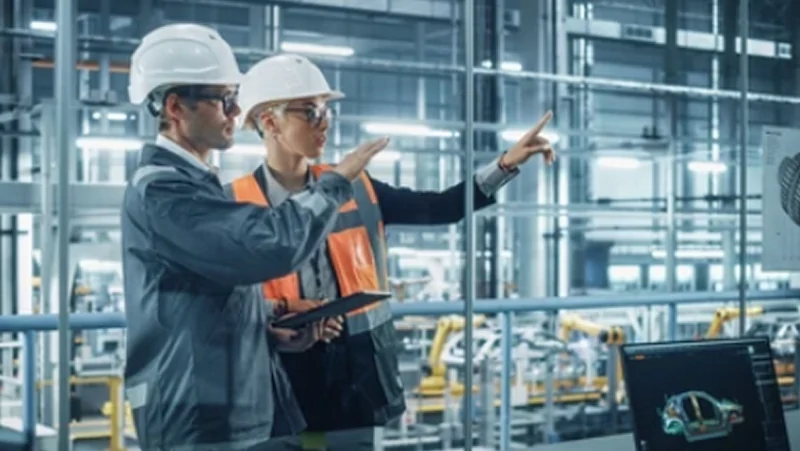













with our expert, who carefully assesses the business requirements and proposes a plan of activities
Software and hardware solutions.
Specific technologies, solutions and tools can differ based on your OT and IT landscape - PLCs, edge, industrial systems, network topology. We constantly monitor the industrial tools market, evaluate trends and news to advise the best of breed and cost-effective solutions.